Sunday, 25 September 2022

Okavango Delta

The Okavango Delta is both a permanent and seasonal home to a wide variety of wildlife which is now a popular tourist attraction. All of the big five game animals—the lion, leopard, African buffalo, African bush elephant and rhinoceros (both black rhinoceros and white rhinoceros)—are present.
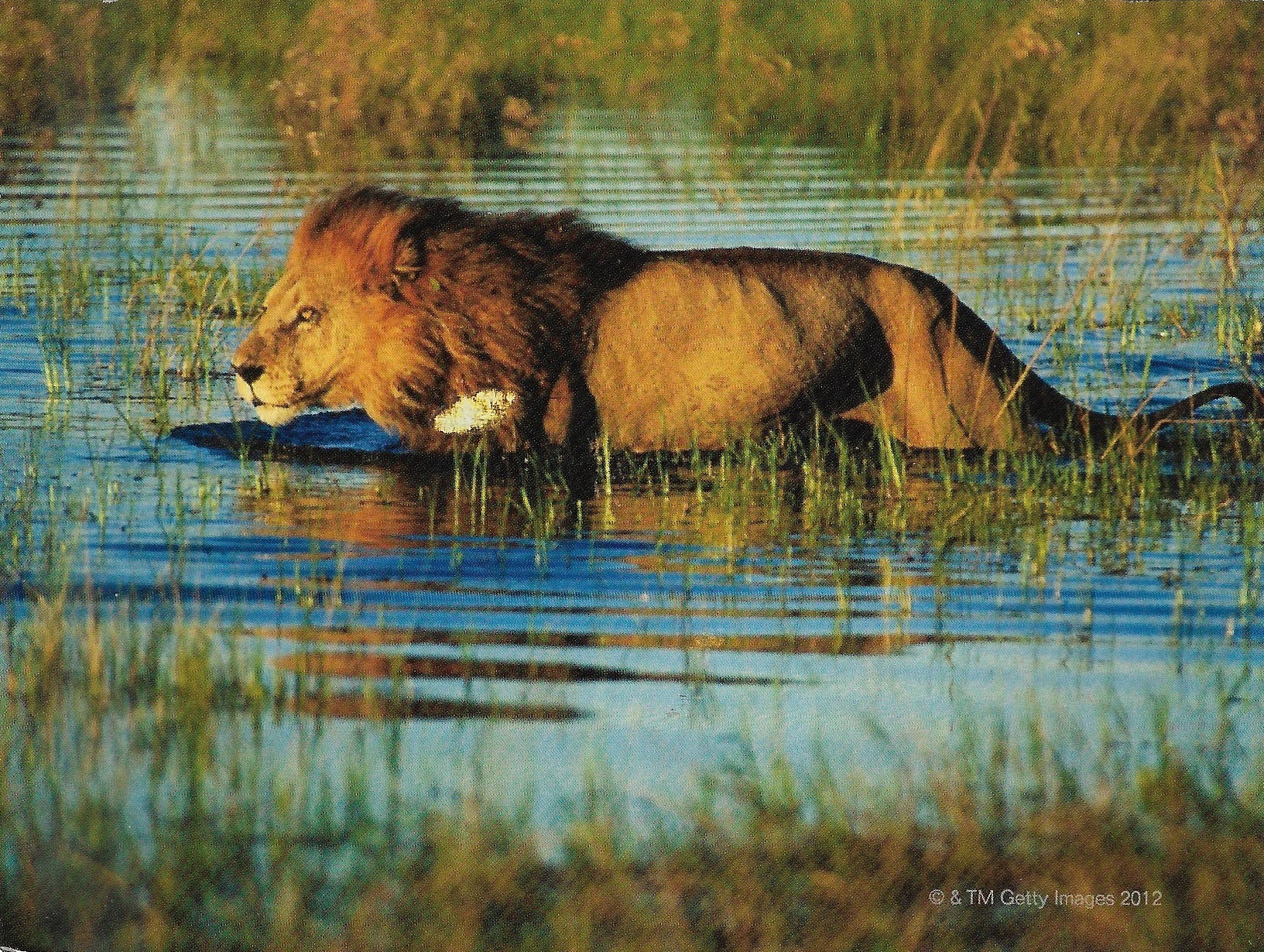

Lion in the Okavango Delta
This postcard was sent from the USA by Nancy

This delta in north-west Botswana comprises permanent marshlands and seasonally flooded plains. It is one of the very few major interior delta systems that do not flow into a sea or ocean, with a wetland system that is almost intact. One of the unique characteristics of the site is that the annual flooding from the River Okavango occurs during the dry season, with the result that the native plants and animals have synchronized their biological cycles with these seasonal rains and floods. It is an exceptional example of the interaction between climatic, hydrological and biological processes. The Okavango Delta is home to some of the world’s most endangered species of large mammal, such as the cheetah, white rhinoceros, black rhinoceros, African wild dog and lion. - in: https://whc.unesco.org/en/list/1432/

Thursday, 15 September 2022

The Loire Valley between Sully-sur-Loire and Chalonnes

So far I only have postcards of three of the many outstanding castles along the Loire Valley. I hope to get more and maybe one day I'll visit some of them


Château de Cheverny
This postcard was sent by Nadia


The castle of Cheverny, is located between Blois and Chambord and a few kilometres below Cheverny village, and is one of the best preserved castles in all of France - and well worth visiting to admire the highly original works of antique kept there and for its architecture, in both classical and Renaissance styles.
The castle of Cheverny, begun around 1500, was concluded in a few years between 1604 and about 1634 by the Hurault Family and it welcomes visitors with a road 6 kilometres long, wide and lush gardens and a stream. It has a rectangular base, at the corners of which stand four pavilions, and, apparently, the overall design of the building was the work of Jacques Bougier (the architect of Blois) and Jean Mosnier (1600-1656), who respectively headed the construction and decoration of the castle. - in: http://www.loirevalleyfrance.net/castles/chateau-cheverny.html


Château de Chenonceau
This postcard was sent by Marion

The Château de Chenonceau is a French château spanning the River Cher, near the small village of Chenonceaux in the Indre-et-Loire département of the Loire Valley in France. It is one of the best-known châteaux of the Loire valley.

Château de Chenonceau
This postcard was sent by Pasquale

The estate of Chenonceau is first mentioned in writing in the 11th century. The current château was built in 1514–1522 on the foundations of an old mill and was later extended to span the river. The bridge over the river was built (1556-1559) to designs by the French Renaissance architect Philibert de l'Orme, and the gallery on the bridge (1570–1576) to designs by Jean Bullant. - in: wikipedia


Château de Chambord
This postcard was sent from The Netherlands by Gerry

The Château de Chambord at Chambord, Loir-et-Cher, France, is one of the most recognisable châteaux in the world because of its very distinctive French Renaissance architecture which blends traditional French medieval forms with classical Renaissance structures. The building, which was never completed, was constructed by King Francis I of France.
Chambord is the largest château in the Loire Valley; it was built to serve as a hunting lodge for Francis I, who maintained his royal residences at the châteaux of Blois and Amboise.
Chambord was altered considerably during the twenty-eight years of its construction (1519–1547), during which it was overseen on-site by Pierre Nepveu. With the château nearing completion, Francis showed off his enormous symbol of wealth and power by hosting his old archrival, Emperor Charles V, at Chambord. - in: wikipedia

Friday, 2 September 2022

Blaenavon Industrial Landscape

Blaenavon is evidence of the pre-eminence of South Wales as the world's major producer of iron and coal in the 19th century.


Blaenavon
This postcard was sent by Stella

Blaenavon Industrial Landscape, in and around Blaenavon, Torfaen, Wales, was inscribed a World Heritage Site by UNESCO in 2000. The Blaenavon Ironworks, now a museum, was a major centre of iron production using locally mined or quarried iron ore, coal and limestone. Raw materials and products were transported via horse-drawn tramroads, canals and steam railways. 
The Industrial Revolution in Britain was based on iron and coal, the main products of the South Wales valleys. Production of pig iron in the region grew from 39,600 tons in 1796 to 666,000 tons in 1852, and the iron was used to build railways, factories and engines around the world. Blaenavon was an important centre of coal mining and iron making in South Wales during the late 18th and early 19th centuries. The Blaenavon Ironworks was opened around 1789 and caused development of the mines, quarries and housing. - in: wikipedia

The Slate Landscape of Northwest Wales

The Slate Landscape of Northwest Wales illustrates the transformation that industrial slate quarrying and mining brought about in the traditional rural environment of the mountains and valleys of the Snowdon massif.


Dinorwig
This postcard was sent by Adam

Dinorwig sometimes spelled Dinorwic, is a village located high above Llyn Padarn, near Llanberis, in Wales.
The village has a long history of slate quarrying. The Romans used local slate for the construction of Segontium, and slates from the valley were used in the construction of Caernarfon Castle. The main local quarry was the Dinorwic Quarry, which was worked from the late 1770s until 1969. After the First World War, cheaper alternative roofing materials became available and production at the quarry declined. - in: wikipedia

Sunday, 21 August 2022

Rila Monastery

This is one of the buildings in Bulgaria that I'd most love to visit. It looks very beautiful and it has wonderful frescoes.

Rila Monastery
The Monastery of Saint Ivan of Rila, better known as the Rila Monastery (Bulgarian: Рилски манастир, Rilski manastir) is the largest and most famous Eastern Orthodox monastery in Bulgaria. It is situated in the southwestern Rila Mountains, 117 km (73 mi) south of the capital Sofia in the deep valley of the Rilska River at an elevation of 1,147 m (3,763 ft) above sea level, inside of Rila Monastery Nature Park. The monastery is named after its founder, the hermit Ivan of Rila (876 - 946 AD), and today houses around 60 monks.

Rila Monastery

Founded in the 10th century, the Rila Monastery is regarded as one of Bulgaria's most important cultural, historical and architectural monuments and is a key tourist attraction for both Bulgaria and Southern Europe. In 2008 alone, it attracted 900,000 visitors. The monastery is depicted on the reverse of the 1 lev banknote, issued in 1999. - in: wikipedia

Historic Bridgetown and its Garrison

This is my very first postcard from Barbados! It's an old card, but more importantly it's a new UNESCO site in my collection!


The Careenage and The Parliament
This postcard was sent by Javier

The Constitution River or commonly called "The Careenage", is a river located along Carlisle Bay, on the south-western portion of Barbados. The western end of the river runs through the centre of Bridgetown in Saint Michael. The river acts as a channel for heavy rain run-off from the higher interior regions of the island. Additionally, it is a small sheltered shallow passage or yacht harbour for medium-sized yachts or small craft boats to dock in the city. - in: wikipedia


The Parliament Buildings (also known as The Public Buildings, or more rarely Parliament House), is the seat of the Parliament of Barbados. Built between 1870 and 1874, the buildings have been the meeting place for both chambers of Parliament since 16 June 1874, and a former site of Colonial administration of Barbados. It consists of two buildings in the neo-Gothic architectural style, and are reminiscent of the Victorian era of Great Britain.

The buildings are situated along the north bank of the Constitution River and are bordered by Upper Broad Street and National Heroes Square to the south; strategically at the heart of the capital city Bridgetown. - in: wikipedia

Sunday, 14 August 2022

Ancient Ferrous Metallurgy Sites of Burkina Faso

The Ancient Ferrous Metallurgy Sites of Burkina Faso are a collection of ancient metallurgy sites across five locations in the Nord and Centre-Nord regions of Burkina Faso, used to extract iron from ore.


Ancient Ferrous Metallurgy Site in Burkina Faso

This property is composed of five elements located in different provinces of the country. It includes about fifteen standing, natural-draught furnaces, several other furnace structures, mines and traces of dwellings. Douroula, which dates back to the 8th century BCE, is the oldest evidence of the development of iron production found in Burkina Faso. The other components of the property – Tiwêga, Yamané, Kindibo and Békuy – illustrate the intensification of iron production during the second millennium CE. Even though iron ore reduction –obtaining iron from ore – is no longer practiced today, village blacksmiths still play a major role in supplying tools, while taking part in various rituals. - in: https://whc.unesco.org/en/list/1602